
E5 develops and delivers power infrastructure around the client’s actual electricity requirement—not around a single technology.
Reliable Power. Engineered Around the Customer.
We develop renewable, conventional and hybrid energy systems for institutions, industry, commercial users and communities. Technology selection follows demand, operating hours, resources and site conditions.
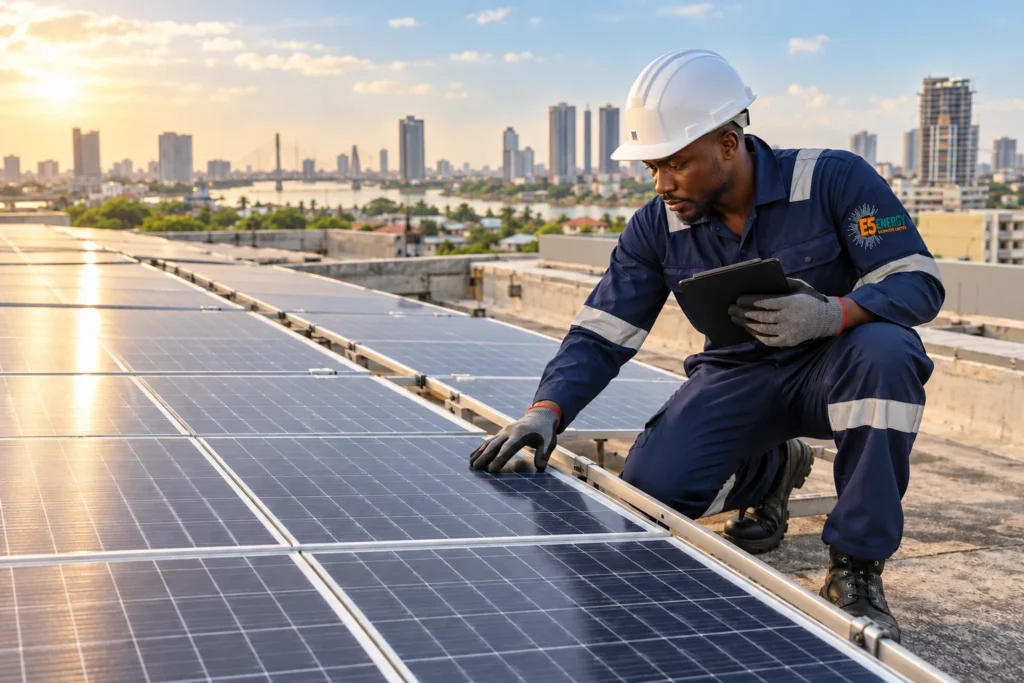
Solar PV and battery storage form a coordinated power system. Solar generation supplies the facility while PCS, storage and intelligent controls manage the flow of electricity around load and resilience requirements.
Transition from diesel dependence or unreliable supply to a tailored renewable, gas-fired or hybrid system.
Design continuity for critical loads through generation, storage, backup, controls and maintenance, against an agreed service objective.
Assess dam and run-of-river opportunities, with floating solar PV and storage where appropriate.
Connect generation, storage and flexible loads through EMS, DRMS, SCADA and smart metering.
Site assessment, engineering, procurement, installation, commissioning and lifecycle support.
BESS, hybrid generation and private electricity networks designed around resilience and uptime.
Conventional dam and run-of-river systems, with floating solar and storage where project conditions support them.
Distribution, metering, demand management, energy accounting, maintenance and optimisation.
Engineering schematic: configuration varies with load, resources and resilience requirements.
Our delivery scope can run from feasibility and load assessment through design, procurement, installation, testing, commissioning and operational support. Solar PV, hydropower, gas-fired, thermal, wind, biomass and biogas options are assessed for suitability, with storage and backup where required.
Solutions are engineered around load profile, resilience requirements, available generation resources, storage requirements and lifecycle economics.
For mission-critical operations, electricity reliability cannot depend on a single generation source. BESS can be combined with complementary generation sources, intelligent controls and system redundancy to support uptime through resource variability and grid interruptions.
Storage and PCS requirements are engineered around the operating environment. E5’s delivery projects at NICN Abuja and Lagos combine solar PV, PCS and BESS as integrated distributed power infrastructure.
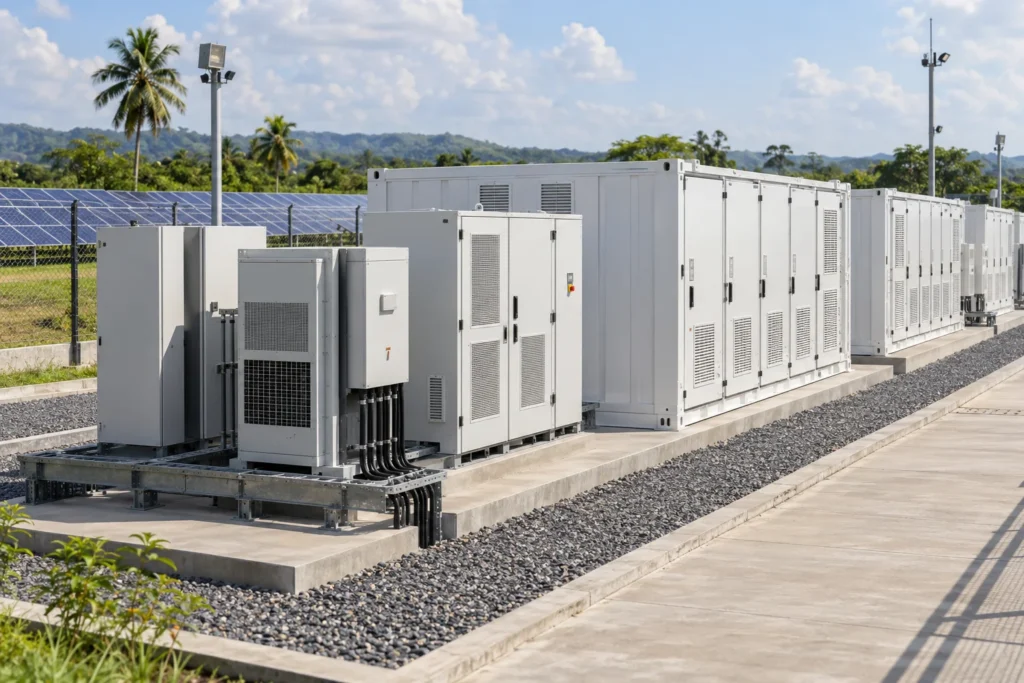
Power Swap supports a transition from diesel dependence or unreliable supply to a tailored renewable, gas-fired or hybrid system, based on the facility’s demand and operating conditions.
Rather than simply adding solar panels, E5 assesses the customer’s electricity environment and engineers the combination of generation, storage and management required to improve resilience and reduce dependence on constrained supply.
For mission-critical operations, electricity reliability cannot depend on a single generation source.
Always On designs continuity for critical loads through suitable generation, storage, backup, controls, redundancy and maintenance. Resilience and service objectives are agreed for each deployment.
We integrate generation, storage, distribution, metering, monitoring, maintenance and consumption management, including closed private electricity networks where appropriate.
An energy management system (EMS) schedules generation and storage. A demand response management system (DRMS) coordinates flexible loads. Supervisory control and data acquisition (SCADA) supports monitoring and control, while smart metering supports reporting and maintenance.
Controls, data interfaces, operating responsibilities and support are defined for the project so the electricity system can be managed throughout its lifecycle.
Aqua Power assesses dam and run-of-river opportunities, with floating solar PV and storage where appropriate. Each opportunity is subject to engineering, environmental and water-use requirements.
The objective is to use complementary technologies to increase resource utilisation and improve year-round system resilience.